Most real estate advisors tell their clients to call an insurance agent after they go under contract. I don't work that way. I am the insurance professional, and I believe the coverage conversation belongs at the beginning of the buying process — not squeezed into the 48 hours before closing when you're already buried in paperwork. The reason is simple: in Florida, insurance is not a box to check. It is a foundational financial decision that affects your monthly carrying cost, your lender's conditions, your ability to resell, and your family's financial security if the worst ever happens.
I'm Agu Ukaogo — a licensed Florida real estate advisor and a licensed insurance professional, brokered through Premier Partners | Real Brokerage. I hold Insurance NPN 22138920. The dual license is not a marketing angle. It is the thing that lets me give you a complete picture — purchase price, taxes, HOA, and insurance — before you fall in love with a property. My north star remains constant: Buy the home. Protect the family. Build the legacy. This guide covers everything you need to understand about Florida homeowners insurance before you close.
Why Florida Insurance Is Unlike Any Other State
Florida is, without question, one of the most challenging insurance markets in the country. To understand why, you need to understand three things: geography, litigation history, and reinsurance economics.
Geography: Florida is a 1,350-mile peninsula surrounded on three sides by water, sitting directly in the path of Atlantic hurricane systems that have produced some of the most catastrophically expensive storms in American history — Andrew (1992), Irma (2017), Ian (2022). The physical risk profile is unlike almost any other state, and insurance pricing reflects that.
Litigation History: For many years, Florida's legal environment — particularly provisions around Assignment of Benefits (AOB) and one-way attorney fee arrangements — created a claims environment where litigation was disproportionately frequent relative to actual claim volume. Carriers absorbed enormous legal costs that ultimately were priced into every Florida policyholder's premium or used as justification for market exits. Recent legislative reforms in 2022 and 2023 substantially addressed these issues, and the market has begun stabilizing.
Reinsurance Economics: Insurance companies buy their own insurance — called reinsurance — to protect against catastrophic loss years. When reinsurance prices spike globally (as they did following Irma, Maria, and Ian), Florida carriers pass those costs through to policyholders. In years when the global reinsurance market tightens, Florida premium increases often bear no direct relationship to what happened on your specific block.
The combination of these three factors means that Florida homeowners insurance costs significantly more than the national average — sometimes two to four times more — and that navigating the market requires more sophistication than simply accepting the first quote your lender orders. Getting the right coverage at the right price, from a carrier with a solid claims-paying reputation, requires working with someone who knows this market from the inside.
When you work with me to buy a Florida home, the insurance review is not an afterthought — it is built into the process from the first property we discuss. I can review coverage options, compare policies, and walk through the real monthly carrying cost before you write an offer. No referrals to a third party, no surprises at the closing table.
The 4 Types of Coverage Every Florida Homeowner Needs
Most Florida homeowners need at minimum four distinct coverages. They are not interchangeable, and — critically — they are not all included in a single policy. Understanding what each covers, and what it does not, is the starting point for building a protection strategy that actually works.
Homeowners Insurance
Covers your dwelling, other structures, personal property, loss of use, and personal liability. Does NOT cover flood or windstorm in many Florida policies. The HO-3 (single family) or HO-6 (condo) policy is your base layer.
Flood Insurance
Completely separate from homeowners. Required by lenders for properties in Special Flood Hazard Areas. Available through NFIP or private carriers. Does NOT cover wind-driven rain — that distinction matters enormously in hurricane claims.
Wind / Hurricane Coverage
May be included in your homeowners policy or may require a separate windstorm policy through Citizens or a private carrier. Hurricane deductibles in Florida are typically 2%–5% of dwelling coverage — on a $1M home, that is a $20,000–$50,000 out-of-pocket before the policy pays.
Umbrella / Excess Liability
Provides liability coverage above the limits of your homeowners and auto policies. For luxury homeowners, standard $300,000 liability limits are frequently insufficient. An umbrella policy extends coverage to $1 million, $2 million, or more — for a modest premium.
Homeowners Insurance in Florida — What's Covered and What Isn't
A standard Florida HO-3 homeowners policy for a single-family residence provides coverage in several main categories:
Dwelling Coverage (Coverage A)
This is the coverage for your home's structure — the walls, roof, floors, built-in appliances, and attached structures. In Florida, it is critical to insure at full replacement cost, not market value or purchase price. If your $1.2 million home would cost $1.8 million to rebuild from scratch due to current construction costs, your policy needs to reflect $1.8 million in dwelling coverage. Underinsurance is one of the most common mistakes Florida homeowners make, and it produces dramatically reduced claim payments when losses occur.
Other Structures (Coverage B)
Covers detached garages, fences, pergolas, docks (in some policies), and similar structures on your property. Typically set at 10% of dwelling coverage by default — worth reviewing if you have significant outbuildings or a substantial dock.
Personal Property (Coverage C)
Covers your furniture, electronics, clothing, appliances, and personal belongings. Most standard policies provide replacement cost coverage for personal property, but luxury items — art, jewelry, watches, wine collections, high-end electronics — often exceed sub-limits in standard policies. A personal articles floater or scheduled property endorsement is typically needed for valuables above those sub-limits.
Loss of Use / Additional Living Expenses (Coverage D)
Covers temporary housing, increased food costs, and other living expenses if your home becomes uninhabitable after a covered loss. After a major hurricane, this coverage can be worth more than you expect — hotel rates spike, and finding acceptable temporary housing in South Florida after a major storm can be expensive and time-consuming.
Personal Liability (Coverage E) and Medical Payments (Coverage F)
Provides coverage if someone is injured on your property or if you cause damage to someone else's property. Standard limits are $100,000 to $300,000 — often inadequate for high-net-worth homeowners. Pair with an umbrella policy for proper protection at the luxury level.
What a standard HO-3 does NOT cover in Florida: flood damage (explicitly excluded), earthquake, wear and tear, mold (limited or excluded in most policies), business activities conducted from the home above certain thresholds, and in many cases, windstorm if you are in a high-risk coastal area where wind coverage is written separately.
Flood Insurance in Florida — What You Must Know
Flood is the most misunderstood coverage in Florida real estate, and the consequences of that misunderstanding can be devastating. Let me be direct: your homeowners policy does not cover flood. Period. Not a little bit, not under certain conditions. The word "flood" in a standard homeowners policy triggers an exclusion, not a payment.
Flood insurance in Florida is available through two main channels:
National Flood Insurance Program (NFIP)
Administered by FEMA, the NFIP provides federally backed flood coverage for residential properties. Maximum coverage limits are $250,000 for the structure and $100,000 for contents. For a $500,000 home, the NFIP covers the building fully up to $250,000 — meaning a total loss leaves you significantly underinsured at the dwelling level. NFIP premiums are based on FEMA's Risk Rating 2.0 methodology, which considers your property's specific flood risk including proximity to water, base flood elevation, and building type.
Private Flood Insurance
Private flood carriers entered the Florida market in meaningful numbers over the past several years and often offer advantages over NFIP: higher coverage limits (covering full replacement cost on high-value homes), broader coverage definitions, shorter waiting periods (NFIP typically has a 30-day waiting period before coverage takes effect), and competitive pricing in many risk zones. For luxury homes where the structure exceeds NFIP's $250,000 limit, private flood coverage is not optional — it is necessary.
One nuance that matters in hurricane claims: flood insurance covers water that enters from the ground up — storm surge, rising rivers, heavy rainfall accumulation. Wind-driven rain — water that enters through a breach in your roof or walls caused by wind — is typically a windstorm claim, not a flood claim. In a major hurricane, the damage attribution between wind and flood can become contentious and significantly affect your claim recovery. Getting the coverage structure right before the storm is the only time it matters.
Wind and Hurricane Coverage in Florida
Windstorm coverage — specifically coverage for hurricane and tropical storm wind damage — is one of the most critical and most complicated elements of Florida insurance. Depending on where your home is located and which carrier writes your policy, windstorm may be included in your homeowners policy, written as a separate endorsement, or required to be purchased separately through Citizens or a private wind carrier.
The most important concept every Florida homeowner must understand is the hurricane deductible. Unlike a standard flat-dollar deductible (e.g., $2,500), Florida hurricane deductibles are expressed as a percentage of your dwelling coverage — typically 2%, 3%, or 5%. On a $1 million home, a 5% hurricane deductible means you pay the first $50,000 out of pocket before your policy responds. On a $3 million home, that same 5% deductible is $150,000. This is not the deductible you see on your monthly payment schedule — it activates specifically when a named hurricane triggers a policy event in Florida.
Florida law defines when the hurricane deductible applies: it is triggered when the National Hurricane Center issues a hurricane watch or warning for any part of Florida, and it applies to damage that occurs during or after that trigger event. If a storm is not officially designated a hurricane but still produces hurricane-force damage, the standard all-peril deductible may apply instead — a critical distinction in borderline storms.
South Florida High-Velocity Hurricane Zone
Miami-Dade and Broward Counties are classified as High-Velocity Hurricane Zones (HVHZ), which creates the strictest building code requirements in the country — and for insurance purposes, this can actually work in homeowners' favor. Homes built or substantially renovated to HVHZ standards with impact windows, reinforced roofing connections, and other wind mitigation features often qualify for significant insurance discounts. A wind mitigation inspection — conducted by a licensed inspector — documents these features and can produce premium reductions of 20% to 40% in some cases. I always recommend that luxury buyers arrange a wind mitigation inspection as part of their due diligence.
Citizens Insurance — Florida's Insurer of Last Resort
Citizens Property Insurance Corporation is the state-backed insurance entity created to provide coverage when private carriers are unwilling or unable to write a policy for a Florida property. For many years, particularly following multiple hurricane seasons and the private market contraction of the late 2010s and early 2020s, Citizens became one of the largest property insurers in the state by default — not because it was the best option, but because it was often the only option.
Citizens is a legitimate insurer that pays valid claims. However, buyers and homeowners should understand its structure:
- Citizens has coverage caps. Policies are capped at $700,000 for personal lines residential (as of recent legislative updates) and at specific thresholds for contents and other coverages. High-value homes above these limits require excess or surplus lines coverage.
- Citizens rates are set by the state legislature, not the private market. Rate increases are subject to political and regulatory constraints that do not always align with actual risk pricing — which creates some uncertainty about the long-term direction of rates.
- Citizens can levy assessments on all Florida policyholders — including non-Citizens customers — following a catastrophic storm that depletes Citizens reserves beyond a threshold. This systemic assessment risk is real and has occurred historically.
- Citizens has a "depopulation" mandate, meaning it is legally required to push policies to the private market when private coverage becomes available at rates within a certain percentage of Citizens. This has accelerated as new private carriers re-enter Florida in 2025 and 2026.
My recommendation: if a private market alternative exists at a comparable cost with a financially strong carrier, explore it seriously rather than defaulting to Citizens. Citizens should be the safety net it was designed to be — available when the private market isn't — not the first call.
How Condo Insurance Works in Florida — The HO-6 Policy
If you are buying a condominium — in Brickell, Edgewater, Sunny Isles, or anywhere in Miami — your insurance picture is different from a single-family home buyer's, and the differences matter significantly.
When you own a condo, your association carries a master insurance policy that covers the building structure, common areas, and in some cases the standard interior finishes of individual units. What the master policy does not cover — in any building under a "bare walls" policy — is the interior of your unit from the structural boundary inward: your flooring, drywall, cabinetry, appliances, light fixtures, and any upgrades above the building's standard finishes.
Your personal condo insurance policy — an HO-6 — is designed to fill that gap. A properly structured HO-6 should include:
- Dwelling / Unit Property Coverage: Covers your unit interior from the coverage boundary (bare walls or the building standard) up to the replacement cost of your actual interior. For a $2 million Brickell condo with a custom build-out, this number needs to reflect the actual cost to restore your specific finishes — not a generic allowance.
- Personal Property Coverage: Covers your furniture, clothing, electronics, and personal belongings within the unit. Schedule high-value items separately.
- Loss of Use: Covers additional living expenses if a covered loss makes your unit temporarily uninhabitable. Critical in a condo context where water damage from an upper floor can displace you for weeks while restoration happens.
- Personal Liability: Covers your liability as a unit owner. If a guest is injured in your unit, or if a water leak from your unit damages the unit below, your HO-6 liability coverage responds.
- Loss Assessment Coverage: This is critical for condo owners. If the association levies a special assessment that is related to a covered loss under the master policy — for example, hurricane damage to the building that the master policy covers only partially — your loss assessment coverage can pay your per-unit share of that assessment, up to your policy limit. Minimum $10,000 is standard; I often recommend $50,000 or more for luxury buildings.
One more critical point on condo insurance: the master policy's hurricane deductible applies at the building level — not per unit. If the building has a 5% deductible on a $100 million insured value, that is a $5 million building-level deductible. That amount is typically assessed back to unit owners pro rata. Your loss assessment coverage on your HO-6 can protect you from that exposure, but the limit needs to be adequate for the building's size and your proportionate share.
For more on how the building's master policy and reserve fund work together — and what to check before you buy any Miami condo — see my Condo Reserve Study Guide.
Mortgage Protection and Life Insurance After Closing
This is the part of the insurance conversation that most real estate advisors skip entirely, because they're not licensed to have it. I am. And I believe it is one of the most important conversations in the entire homebuying process — because it is the one that protects your family, not just your property.
When you close on a home — particularly a luxury home with a mortgage of $1 million, $2 million, or more — you have created a significant financial obligation that is secured by your home and backed by your income. The question every buyer should ask is simple: if something happened to me, could my family keep this home?
There are two primary instruments for addressing that question:
Mortgage Protection Life Insurance (Term)
A term life insurance policy structured to match the mortgage balance and repayment timeline — often 15 or 30 years — that pays a death benefit to your beneficiaries upon your passing. If you carry a $1.5 million mortgage, a $1.5 million term policy ensures that your family can pay off that mortgage and retain the home free and clear, regardless of what happens to your income. Term life insurance is generally the most affordable life insurance product per dollar of coverage, and for young, healthy buyers it can be remarkably inexpensive relative to the protection it provides.
Indexed Universal Life Insurance (IUL)
For buyers with a longer-term wealth-building perspective, an Indexed Universal Life policy offers permanent coverage with a cash value component tied to a market index (such as the S&P 500), with a floor that protects against negative index performance. IUL policies provide the death benefit protection of traditional life insurance while building a tax-advantaged cash value that can be accessed during your lifetime for retirement income, education funding, or other financial needs. Many of my clients use an IUL as part of an integrated wealth protection strategy around their real estate holdings.
The conversation about life insurance belongs at or shortly after closing — when your financial obligations are newly concrete, your insurability is established, and the cost of delay begins to show up in higher premiums as you age. I have this conversation with every client I close a transaction with, because it is the final piece of what Buy the home. Protect the family. Build the legacy. actually means in practice.
A luxury home purchase creates a significant financial obligation backed by your income. Homeowners insurance protects the asset. Life and mortgage protection insurance protects the income stream that pays for it. Both matter. Most buyers get the first and never think about the second — until it is too late. I make sure neither piece is missing.
Get Your Complete Florida Insurance Picture Before You Close
I'll review your homeowners, flood, wind, and condo coverage options — plus the mortgage protection conversation — as part of your buying process. Not after. Before. That's how you protect everything you're building.
FAQ — Florida Homeowners Insurance
What insurance do I need when buying a home in Florida?
At minimum, every Florida homeowner needs four coverages: a homeowners policy (HO-3 for single-family, HO-6 for condos) for the dwelling, personal property, and liability; flood insurance through NFIP or a private carrier; windstorm coverage, which may be bundled in your homeowners policy or written separately; and personal liability coverage, ideally extended by an umbrella policy if your net worth warrants it. Mortgage lenders will require hazard coverage and flood insurance for properties in designated flood hazard areas. Beyond the basics, I strongly recommend discussing mortgage protection life insurance at or before closing — it is the coverage that keeps your family in the home if your income is ever disrupted, and it is the one most buyers put off until it becomes urgent.
Why is homeowners insurance so expensive in Florida?
Florida homeowners insurance is among the highest in the country for three compounding reasons: the state's acute hurricane exposure creates catastrophic risk that carriers price aggressively; a historically litigious claims environment — particularly around Assignment of Benefits abuse — drove carrier losses that were transferred to policyholders through premiums or used as justification for market exits; and high global reinsurance costs pass through to Florida policyholders disproportionately. Recent legislative reforms in 2022 and 2023 addressed the litigation environment significantly, and private carriers have begun re-entering Florida in 2025 and 2026 as the market stabilizes. Working with someone who knows which carriers are re-entering, which are financially strong, and which are pricing competitively in specific zip codes is the difference between paying the right amount and overpaying by 20–40%.
Does my Florida homeowners insurance cover flood damage?
No. Standard homeowners insurance explicitly excludes flood damage everywhere in the United States, including Florida. Flood must be purchased separately through the National Flood Insurance Program administered by FEMA or through a private flood carrier. If your property is in a FEMA Special Flood Hazard Area, your mortgage lender will require flood insurance as a condition of closing — and they will order it if you don't. Even if you are outside the high-risk SFHA boundary, flood insurance is advisable in South Florida given the frequency and geography of heavy rainfall events. One critical distinction: wind-driven rain that enters through a breach in your roof or walls caused by wind is typically a windstorm claim, not a flood claim. Getting that attribution right requires having both coverages in place and understanding which applies to specific damage scenarios.
What is Citizens Insurance and should I use it?
Citizens Property Insurance Corporation is Florida's state-backed insurer of last resort — the safety net created to provide coverage when private carriers won't write a policy in a given location or at a price the homeowner can afford. Citizens pays valid claims and is a legitimate insurer. However, it has coverage caps that can leave high-value homes underinsured at the building level, its rates are subject to legislative control rather than pure market pricing, and it can levy assessments on all Florida policyholders after a catastrophic storm season that depletes its reserves. As private carriers re-enter the Florida market in 2025 and 2026, more alternatives are available than at any point in the past several years. If a financially strong private carrier can write your policy at a comparable cost, that is worth serious consideration. Citizens is the safety net it was designed to be — not necessarily the first call when alternatives exist.
The Bottom Line on Florida Insurance
Florida insurance is complicated, expensive, and impossible to navigate well without someone who knows the market from the inside. The buyers I work with don't navigate it alone — they have me in their corner, licensed to help with both the real estate transaction and the insurance picture, from first conversation to closing day and beyond.
The goal is never just coverage. The goal is the right coverage — structured correctly, priced competitively, from a carrier that will actually pay when the claim arrives. Paired with the right mortgage protection strategy for your income and your family's needs, that is how you build something that lasts. That is how you buy the home, protect the family, and build the legacy.
Explore the Miami Luxury Homes guide for neighborhood context, review the Condo Reserve Study Guide if you're buying in a building, and browse the blog for current market intelligence. When you're ready to talk coverage, call me at (305) 791-0812 or reach out through HomeWithAgu.com.
Let's Build Your Full Protection Strategy
One conversation covers the property, the coverage, and the life insurance layer. I'm licensed for all three, and I believe in having all three conversations before — not after — you close. Call me and let's get started.
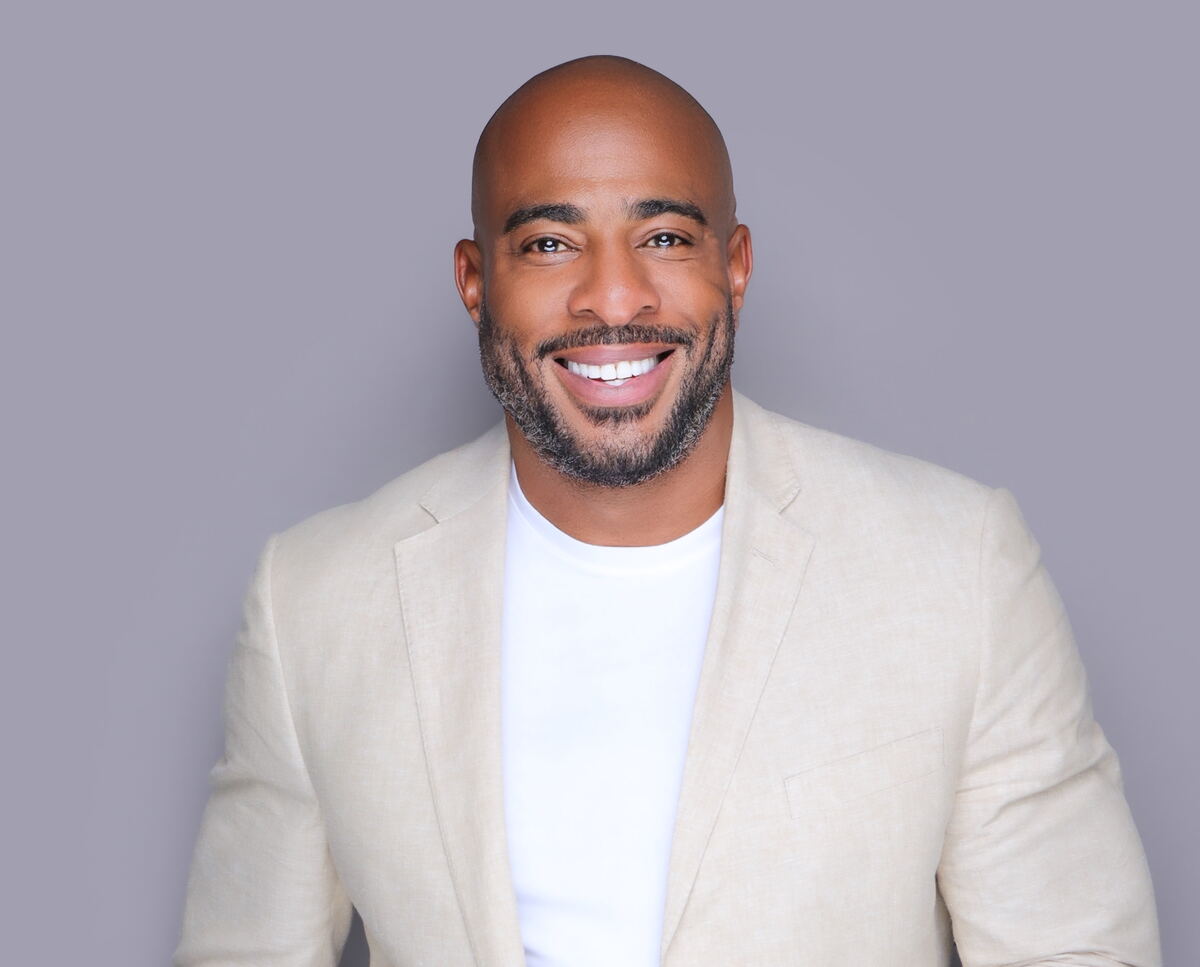
Agu Ukaogo
South Florida Luxury Realtor & Wealth Protection Strategist. FL Real Estate License SL3588365 | Insurance NPN 22138920 | Brokered by Premier Partners | Real Brokerage. HomeWithAgu.com · (305) 791-0812