Most people spend more time planning a vacation than planning their retirement. That's not a criticism — it's just an observation about how human beings work. The vacation has a date. It's real and immediate. Retirement feels abstract until it isn't, and by then, the window to build the plan you wanted has often narrowed significantly. I help clients change that dynamic before it becomes a problem.
I'm Agu Ukaogo — South Florida real estate advisor (FL License SL3588365) and licensed insurance professional (NPN 22138920), brokered through Premier Partners | Real Brokerage. My entire practice is built around a single commitment: Buy the home. Protect the family. Build the legacy. Retirement planning lives right in the center of that commitment. It's where "building" becomes "securing" — where the years of work and discipline get converted into income, freedom, and a plan your family can count on.
Why Retirement Planning Starts With Your Home
For South Florida homeowners, the real estate conversation and the retirement conversation are inseparable. Here's why: your home is almost certainly your single largest asset. If you've owned a property in Miami, Fort Lauderdale, or anywhere in South Florida for more than ten years, you've likely built substantial equity — possibly more than you realize, given appreciation rates in this market over the past decade.
That equity matters to your retirement picture in several specific ways. First, a paid-off home eliminates your largest fixed monthly expense. If you own your South Florida home outright in retirement, you don't need to generate income to cover a mortgage — which means the income you do generate from Social Security, investment accounts, and insurance products stretches significantly further. Second, home equity is an asset you can access if needed, through a home equity line, a reverse mortgage, or a strategic sale and relocation. And third, real property in South Florida has been a remarkably resilient wealth-storage vehicle — one that appreciates over time and can be passed to the next generation as part of a legacy strategy.
The retirement plan I build with clients always starts with an honest assessment of the home: what is it worth, what is owed, when will it be paid off, and how does it fit into the total income picture for retirement?
The Four Income Streams of a Secure Retirement
I think about retirement income in terms of four distinct streams, and the goal is to have at least two or three of them in place before you stop receiving a paycheck. Here's how I frame them for clients.
Social Security — The Foundation, Not the Ceiling
Social Security is the bedrock of most Americans' retirement income, and it's meaningfully more valuable than many people realize — especially because Florida has no state income tax, which changes the effective after-tax value of those payments relative to someone living in New York or California. Delayed claiming (up to age 70) increases your benefit by approximately 8% per year, which is a guaranteed return that almost no investment can match. For married couples, the claiming strategy becomes even more important when you factor in survivor benefits.
But Social Security was never designed to be a complete retirement income solution. It replaces roughly 40% of pre-retirement income for average earners and less for high earners. The other 60% or more needs to come from somewhere else.
Life Insurance and IUL Cash Value — Tax-Free Income
A properly structured Indexed Universal Life (IUL) policy builds cash value over time that can be accessed tax-free through policy loans in retirement. Unlike a traditional IRA or 401(k) distribution, a policy loan does not trigger ordinary income tax. It doesn't increase your provisional income for Social Security tax calculations. And it doesn't push you into a higher Medicare premium bracket. For high-income earners, the tax-free nature of IUL distributions is one of the most powerful advantages in the retirement income toolkit.
This is why I tell clients in their 40s and early 50s who have maxed their qualified plans to seriously consider whether an IUL belongs in their strategy. The time horizon required for the cash value to build meaningfully is 15 to 20 years — which means the conversation needs to happen now, not at 62.
Annuities — Guaranteed Income You Can't Outlive
An annuity converts a portion of your assets into a guaranteed income stream that lasts as long as you live — or as long as you and your spouse live, depending on the structure. For retirees who want the predictability of a monthly paycheck without the risk of drawing down their savings too fast, an annuity creates what planners call a "floor" — a level of guaranteed income that covers basic living expenses regardless of market performance, health events, or how long you live.
In South Florida, where many retirees own a home but have a comparatively smaller liquid savings base, an annuity funded by a portion of retirement savings can be the tool that makes the difference between anxiety and confidence.
Investment and Real Estate Income — The Growth Layer
Above the guaranteed income floor — Social Security, annuities, and IUL distributions — is the growth layer: investment accounts, rental income from real estate, dividend income, and other market-exposed assets. This layer provides the growth that offsets inflation and builds the wealth that can be passed to the next generation. The key is not relying on this layer for survival income — it should be the supplement, not the foundation.
Long-Term Care — The Retirement Risk Nobody Plans For
There is a scenario that derails more South Florida retirement plans than market crashes or sequence-of-returns risk: a long-term care event. A stroke. Dementia. A chronic illness that requires years of professional care. The average annual cost of a private nursing facility room in Florida exceeds $100,000. Assisted living averages $50,000 to $70,000 per year. An extended care event of three to five years can consume $300,000 to $500,000 in retirement assets — money that was supposed to last a lifetime or pass to children.
The good news is that several modern insurance solutions address this risk without requiring a standalone long-term care policy, which many people find unappealing because it feels like paying for something they may never use. IUL policies with chronic illness riders, life insurance policies with LTC acceleration benefits, and hybrid annuity-LTC products all provide ways to fund potential care needs from a policy that also delivers other value. If you trigger the chronic illness rider, you use it. If you never need long-term care, the death benefit passes to your family. The "use it or lose it" problem of traditional LTC policies is eliminated.
Every complete retirement plan I build addresses the long-term care conversation explicitly. It is not optional, and the time to plan for it is before it's needed — not after.
Florida has no state income tax — and that matters enormously in retirement. Every dollar you withdraw from an IRA, annuity, or IUL is taxed only at the federal level. For someone moving from New York or California, the effective retirement income increase from eliminating state income tax can be significant. Owning a home in Florida is not just a lifestyle decision. It's a retirement income decision.
Estate Considerations — What Happens After You're Gone
Retirement planning and estate planning are not separate topics. The financial structures you build for your retirement years determine what your family inherits — and how efficiently. A few things I address with clients in every retirement conversation:
- Beneficiary designations. Life insurance, annuities, and retirement accounts pass by beneficiary designation — not through your will. If your designations are outdated (listing an ex-spouse or a deceased parent), your assets may not go where you intend. I review these with every client.
- Home equity and the estate. South Florida real estate can be a significant inheritance. Whether the home passes through an estate, a trust, or a joint ownership structure matters for both the efficiency of the transfer and the tax treatment. I refer clients to estate attorneys for the legal structures, but I flag the conversation as part of retirement planning.
- Life insurance as estate liquidity. For homeowners with substantial equity and smaller liquid estates, life insurance can provide liquidity at death that allows heirs to keep the property rather than selling it to pay estate costs. This is a classic estate planning use of permanent life insurance.
- IUL for generational wealth. A permanent life insurance policy held inside a properly structured strategy can pass significant wealth to the next generation income-tax-free. This is the wealth-building tool that sophisticated families use to compound across generations.
My Approach to Retirement Planning
- We start with a complete financial picture. Home equity, retirement accounts, Social Security projection, existing insurance, income, debts, and timeline. No assumptions — just real numbers and an honest assessment of where you are.
- We identify the gaps. What income do you need in retirement? What will you have? The difference between those two numbers is the gap we're building to close.
- We build the income floor. Social Security optimization, annuity structure if appropriate, and guaranteed income sources that cover fixed living costs regardless of market conditions.
- We add the growth layer. Investment accounts, IUL cash value, real estate income, and other market-exposed assets that build wealth above the guaranteed floor.
- We address the protection layer. Life insurance, long-term care coverage built into insurance products, and asset protection strategies that ensure a health event doesn't undo everything the retirement plan built.
- We connect the estate dots. Beneficiary designations, home equity transition, and the insurance structures that make the legacy efficient and intentional.
I am both a licensed real estate advisor and a licensed insurance professional. Most retirement planners can't speak intelligently about your real estate. Most real estate advisors can't help you structure an IUL or an annuity. I can do both — and for South Florida homeowners where real estate is often the dominant asset, that integration is everything.
Ready to Build a Retirement You Can Actually Count On?
One conversation. We'll look at where you are, where you need to be, and how to close the gap — using the full range of tools that makes the most sense for your specific situation.
FAQ — Retirement Planning in South Florida
How does homeownership fit into retirement planning in South Florida?
For South Florida homeowners, the home is typically the largest asset in the retirement picture. A paid-off home eliminates the largest fixed monthly expense, reducing how much income you need. Your equity can serve as a source of liquidity if needed. And South Florida property has historically appreciated, making real estate equity a meaningful component of total retirement net worth. I integrate the real estate picture directly into every retirement plan I build — not as a separate conversation but as the foundation of the income strategy.
What role does life insurance play in retirement planning?
Permanent life insurance — particularly an IUL — plays two roles in retirement planning. First, it protects your family if you die before or early in retirement. Second, the cash value grows tax-deferred and can be accessed tax-free through policy loans in retirement, creating supplemental income that doesn't trigger taxable income events or affect Social Security or Medicare calculations. For high-income earners who have maxed qualified plans, an IUL is often the most powerful next step in building tax-efficient retirement income.
How should I plan for long-term care costs in retirement?
Long-term care is one of the most significant and underplanned retirement risks. Florida nursing facility costs exceed $100,000 annually, and an extended care event can consume hundreds of thousands in retirement assets. Modern insurance solutions — IUL policies with chronic illness riders, life insurance with LTC benefits, hybrid annuity-LTC products — address this risk without the "use it or lose it" problem of traditional LTC policies. If you trigger the benefit, you use it. If you don't, the death benefit passes to your family. Every retirement plan I build addresses this scenario explicitly.
The Bottom Line — Retirement on Your Terms
The goal of retirement planning isn't complicated. It's this: build enough reliable income that you never have to choose between the life you want and the money you have. It's arrive at retirement with your home paid down or off, your family protected, and an income plan that doesn't depend on perfect market conditions to work.
That outcome is achievable for most South Florida homeowners who start building the plan with enough lead time. If you're in your 40s or early 50s, you have time to build something powerful. If you're 60 and closer to retirement, we work with what's there and optimize it. Either way, the conversation is worth having.
Reach out through HomeWithAgu.com or call (305) 791-0812. You can also explore related topics: annuities for guaranteed retirement income, IUL for tax-free wealth building, legacy planning for generational wealth, and financial strategy content on the blog.
Your Retirement Deserves a Real Plan
Let's build it together. One free conversation covers your full picture — income, assets, insurance, real estate — and what you need to do to retire on your terms.
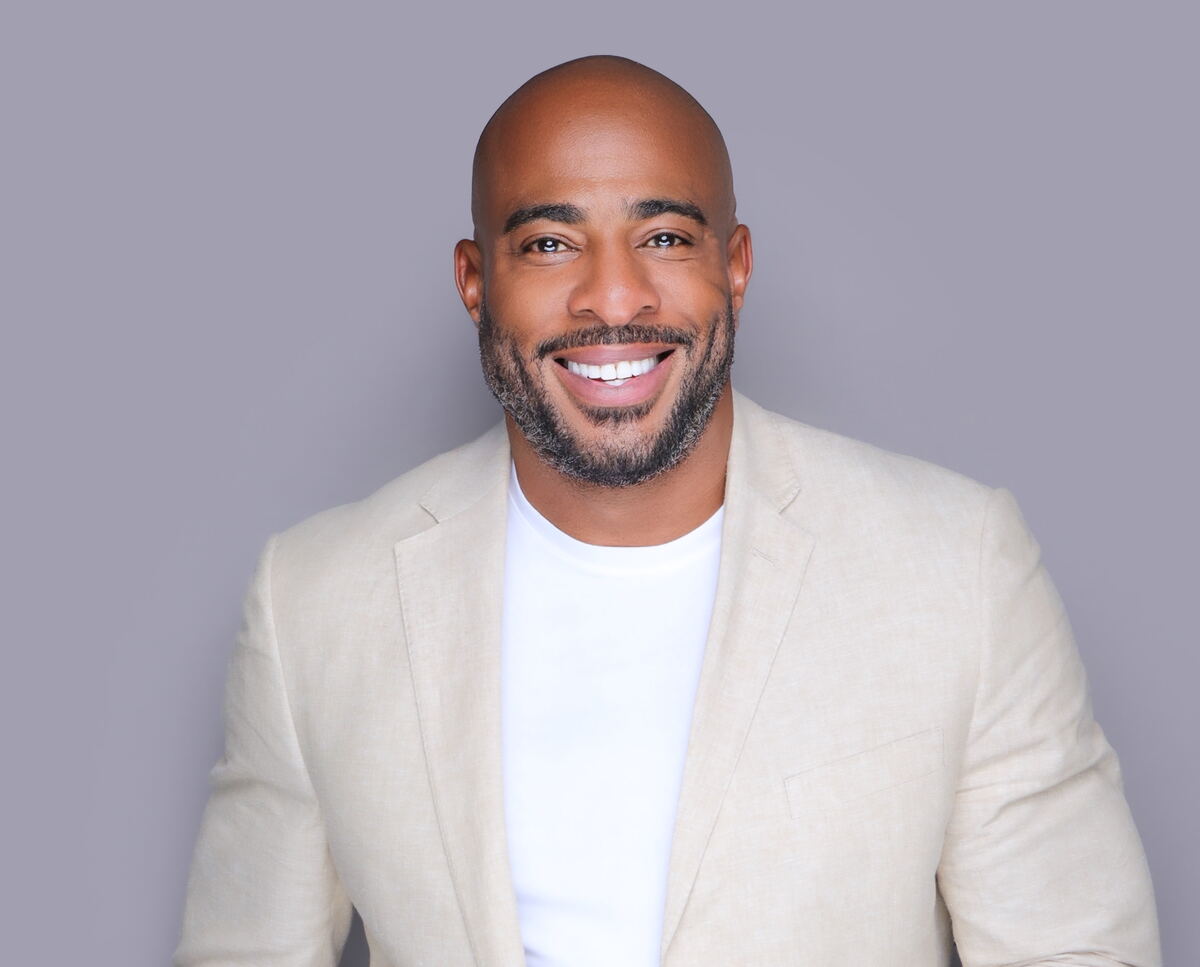
Agu Ukaogo
South Florida Luxury Realtor & Wealth Protection Strategist. FL Real Estate License SL3588365 | Insurance NPN 22138920 | Brokered by Premier Partners | Real Brokerage. HomeWithAgu.com · (305) 791-0812